
Gulf County Arrest History
The Gulf County Sheriff's Office has countywide powers and handles arrests in unincorporated areas, warrants, and court security. Port St. Joe Police Department handles city policing within Port St. Joe. Wewahitchka Police Department serves Wewahitchka. Florida Highway Patrol may create traffic-enforcement arrest records, while Florida Fish and Wildlife Conservation Commission handles wildlife, boating, and conservation enforcement. FDLE may also take part in state investigations.
An arrest history is not one document. The officer creates an arrest or incident report. Gulf County Detention Facility creates the booking entry. Fingerprintable arrest data can reach FDLE. A judge and the Clerk create first-appearance and court records. The State Attorney decides what counts to file, if any. A recent arrest can appear in the sheriff list before a court case exists, while a court docket may remain public long after release.
Using Gulf County Arrests
The official GCSO Arrests page is the first web channel for a recent booking.
Record the booking date or identifier, intake charge, arresting agency, bond details, and current status shown. Then verify time-sensitive release or transfer information with the detention facility at (850) 227-1124. Dynamic lists can lag, and an entry may roll off after release. Absence from a current list does not establish that no past arrest occurred.
The booking card is an intake record. It must not be treated as a final judgment. Do not infer a conviction, final charge, address, medical status, or court outcome from fields displayed by the jail platform.
Looking Up Gulf County Arrests
A complete lookup follows the event across its custodians. Begin with the source closest to the booking, then move to the report, court case, and statewide record when each is relevant.
- Search GCSO Arrests or the Gulf County Sheriff's Office app inmate feature for the recent booking.
- Call the detention facility for urgent custody or release status, then request the narrative from the arresting agency.
- Search the Gulf County Clerk after filing, using Circuit Criminal for felonies and County Criminal for misdemeanors or criminal traffic.
- Use FDLE's paid statewide name search for reported Florida arrest and prosecution history, or Personal Review for your own fingerprint-based record.
- Submit a focused public-record request when the web list does not supply the needed sheriff record.
For a Port St. Joe Police arrest, request the incident narrative from that department or the city records channel. GCSO cannot always release another agency's report. The same custodian rule applies to Wewahitchka police, FHP, FWC, and FDLE records.
Gulf Sheriff Record Requests
The Sheriff's Public Records Request page is the direct route for records in GCSO custody.
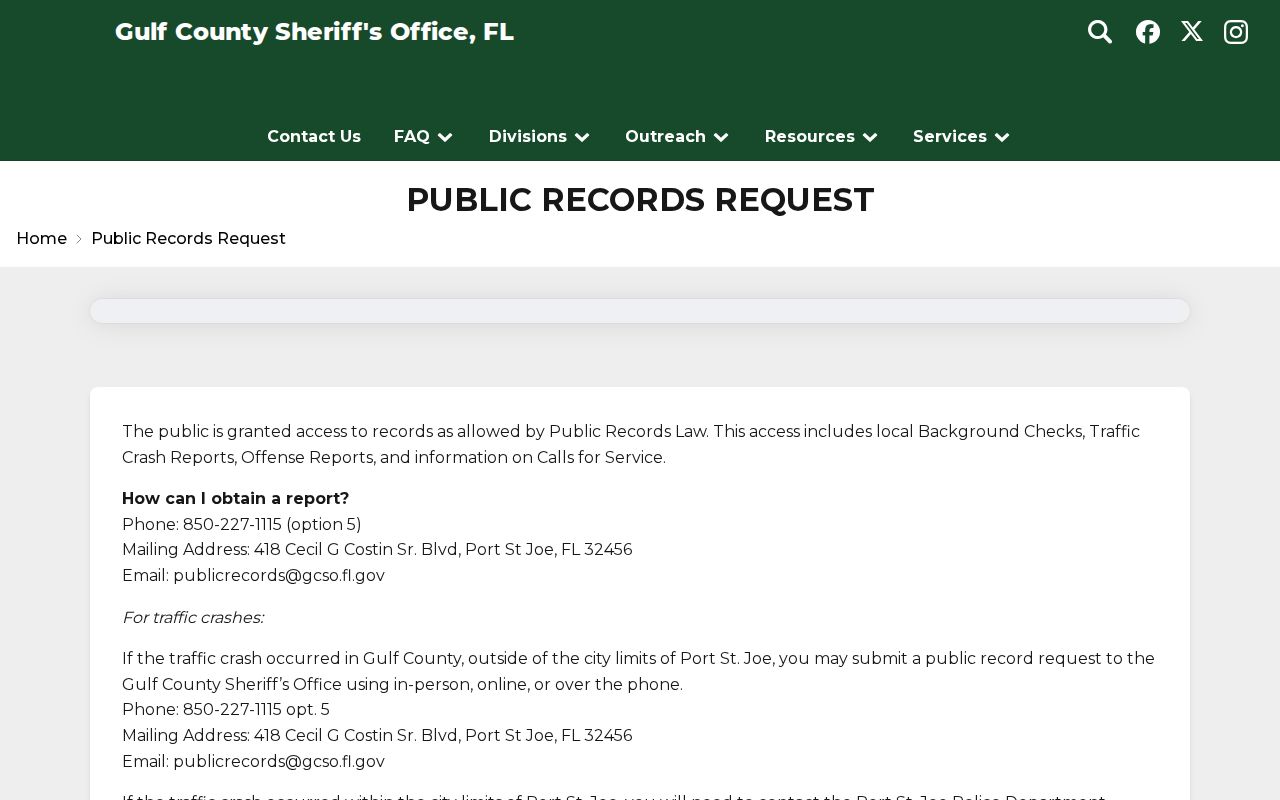
A useful request identifies the incident number when known, date and time range, location, originating agency, exact record type, and preferred format. Florida law generally does not require a requester to explain the purpose. Ask for an itemized estimate if extensive review, redaction, or media duplication could result in a special-service charge.
GCSO headquarters is at 418 Cecil G. Costin Sr. Boulevard, Port St. Joe, FL 32456, and the main number is (850) 227-1115. Sheriff records may include arrest and incident reports, dispatch or 911 material, body-camera records, and booking-related items held by GCSO. Active investigative detail, protected victim data, juvenile information, and exempt personal identifiers may be withheld or redacted.
Inside a Gulf County Arrest Record
An arrest record may pair the officer's probable-cause account with jail intake details. The records should be matched through an incident number, booking identifier, arresting agency, date, and later court number. Names alone can produce false matches, especially in a statewide demographic search.
| Booking Number | The detention identifier used to distinguish one intake event. |
|---|---|
| Booking Date & Time | When jail intake occurred, which may differ from the incident time. |
| Arresting Agency | GCSO, a city department, or the state agency that created the arrest report. |
| Charges | Intake allegations and statutes, not necessarily the prosecutor's filed counts. |
| Bond | Amount or release conditions per charge, plus holds or lawful no-bond status. |
| Mugshot Policy | A photo may be published or released unless an exemption applies; GCSO controls its display. |
| Release Status | Current custody, release, transfer, or other status that should be verified with the jail. |
Juvenile arrest records are confidential except where Florida law authorizes release. Public website display can also be narrower than the underlying public record. Use Chapter 119 channels for a record not displayed, but expect the custodian to review every applicable exemption.
Gulf County Sheriff App Search
The official Gulf County Sheriff's Office app advertises an inmate search even when the main website places more emphasis on the Arrests list. The Apple app listing also names tips, news, push information, and access to the sexual-offender database. It is a second official interface to county detention data, not a separate arrest repository.
Search the app and the web list before calling. For urgent status, the detention facility remains the best confirmation point. A person sentenced to Florida state prison or placed under state supervision belongs in FDC Offender Search instead. Florida VINE provides custody notifications, but it does not maintain the arrest report or schedule jail services.
Booking Logs and Recent Arrests
The GCSO web list is meant for current or recent arrest information. It may show a name, photo if published, booking date, jail identifier, arresting agency, intake charges, bond by charge, and custody or release status. Because the interface is dynamic, confirm its current field labels and freshness when relying on a result.
Intake staff identify the arrested person, inventory property, screen immediate health needs, take fingerprints and a booking photograph, and record charges or warrants. A judge then reviews probable cause and release conditions at first appearance. Release may occur by cash bond, surety bond, recognizance, court order, time served, transfer, or sentence completion. One satisfied bond may not cause release when another hold or detainer remains.
Current visitation, account, phone-vendor, and mail rules were not published through an official source reviewed for the research. Call the detention facility at (850) 227-1124 before travel or payment, and do not rely on a commercial directory's vendor claim.
Gulf Arrest Fingerprints and FDLE
The GCSO fingerprinting services page documents a local fingerprint channel.
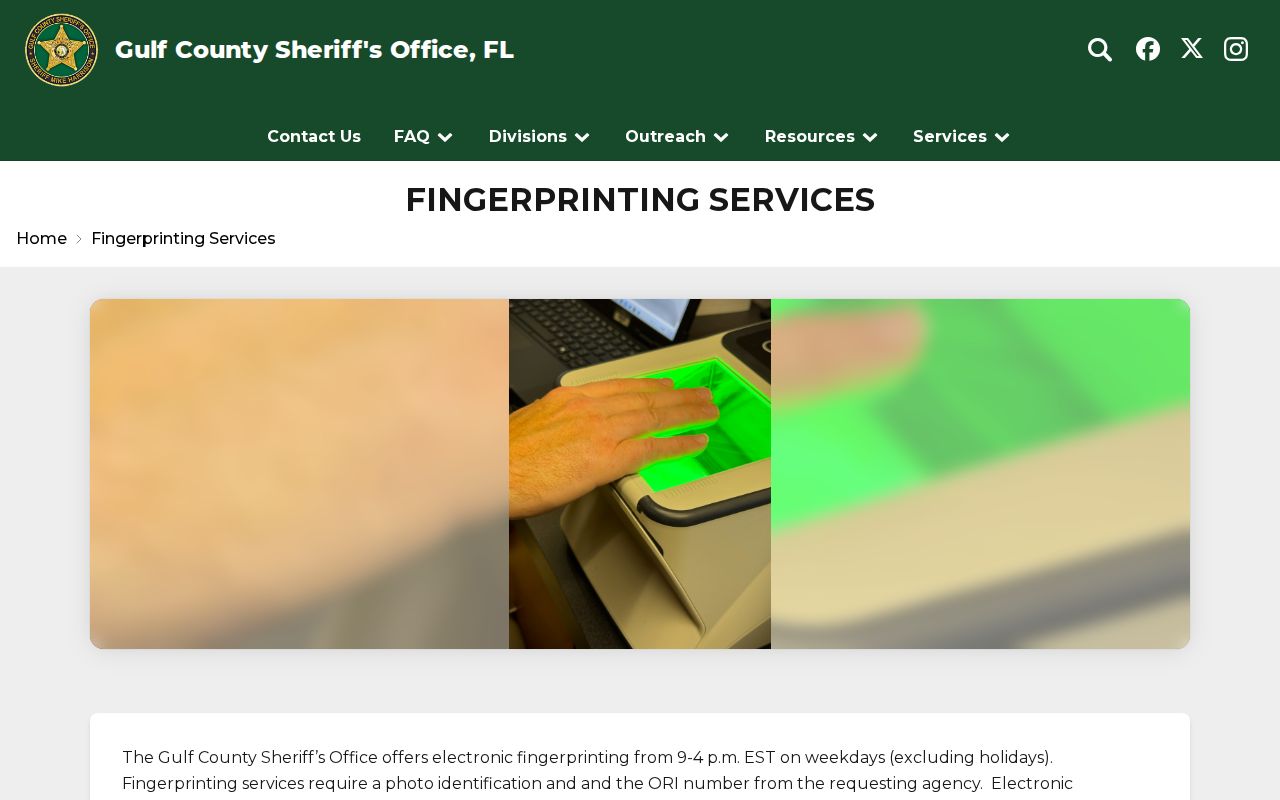
At jail intake, fingerprintable arrest data can contribute to the FDLE Division of Criminal Justice Information Services repository. That statewide cycle is distinct from the jail entry and police narrative. Later court dispositions are reported back so FDLE can connect an arrest with its outcome, but delays or unmatched data can create gaps.
FDLE's public name search costs $24, with a $1 card-processing fee for Instant Search. It is based on demographic matching and is not fingerprint-confirmed identity. A person reviewing or correcting their own Florida record should use FDLE Personal Review with an original fingerprint card by mail. Statutorily authorized state and FBI checks use FDLE-approved LiveScan providers and an ORI supplied by the requesting agency.
Gulf County Wanted Persons
The sheriff's Wanted Persons page is a public-awareness channel.
It is not documented as a full, real-time warrant database. Verify through GCSO at (850) 227-1115, the Clerk docket for capias or warrant events, FDLE's free Wanted Persons Search, and the proper agency record request. Sealed, juvenile, unserved investigative, and safety-sensitive warrants may not be public.
A warrant arrest starts from a court or warrant number that may predate booking. A warrantless arrest begins with an officer's probable-cause account and prompt judicial review. A capias for failure to appear may cause a fresh booking on an older case. Anyone resolving their own suspected warrant should contact the issuing court and law-enforcement agency, confirm the case and hold terms, and arrange a lawful appearance or surrender rather than rely on an anonymous tip form.
Where Gulf County Custody Records Live
County pretrial and recent intake data belongs with GCSO Arrests, the sheriff app, and Gulf County Detention Facility. The free FDC Offender Search covers Florida prison and state community supervision, not a fresh county booking. The federal Bureau of Prisons Inmate Locator covers federal custody.
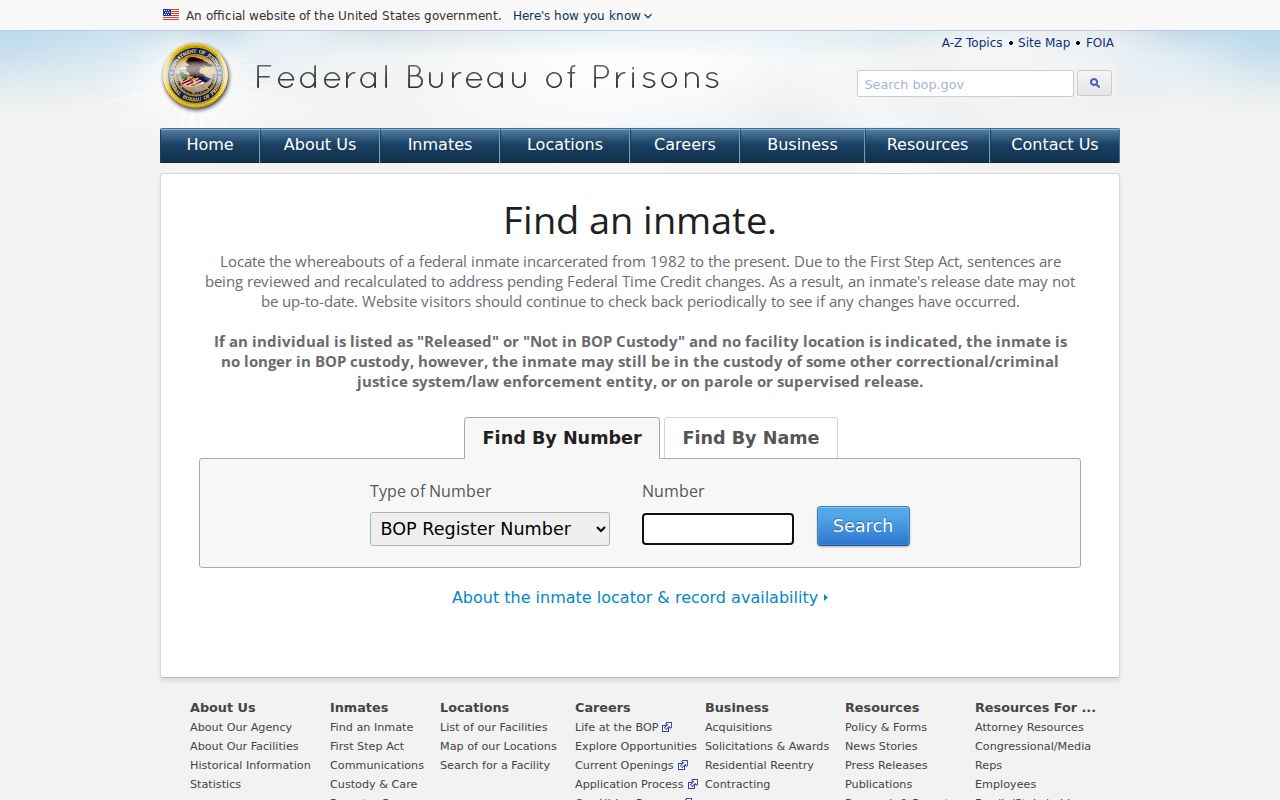
The federal locator accepts a name or federal register, D.C., FBI, or INS number, but it will not show a person held only in Gulf County or Florida prison. Florida VINE adds notification. The Gulf County Clerk docket supplies the underlying state case. Choosing the channel by custody level prevents a blank federal or state result from being mistaken for proof of release.
Arrests Are Not Convictions
Booking charges are allegations recorded at intake. Prosecutors may decline a case, change or add counts, or dismiss a charge. A jury may acquit, and a judge may withhold adjudication where Florida law allows. The Gulf County Clerk's count-level disposition is the proper source for the prosecution result.
| Arrest Record | Conviction Record |
|---|---|
| Created by the arresting agency and jail | Created through the court judgment |
| Shows that an arrest and booking occurred | Shows a finding or adjudication of guilt |
| Lives with the agency, jail, and reported FDLE cycle | Lives in the clerk file and reported statewide history |
| May end in release, no filing, dismissal, or acquittal | May lead to sentence, appeal, sealing, or other later orders |
Note: An arrest is not proof of guilt. Even a dismissal does not automatically remove every agency record. Florida sealing or expunction depends on statutory eligibility, FDLE certification in the ordinary process, and a court order.